CHASSIS

The fundamental structural framework or unibody of the vehicle that supports the engine, drivetrain, and suspension systems.
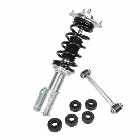
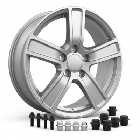
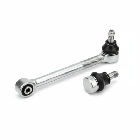
 Anti roll bar bushes
 Anti roll bar link
 Anti roll bar stabiliser kit
 Bracket stabilizer mounting
 Axle bushes
 Suspension ball joint
 Subframe
 Suspension arm
 Suspension bushes
 Springs
 Shock absorber
 Shock absorber mounting
 Wheel bearing
 Wheel hub
 Leaf spring
 Leaf spring mounting
 Frame mounting
 Steering knuckle
 Active suspension parts
 Other suspension parts
 Air system
Learn More About Chassis
The chassis is the foundational load-bearing framework of the vehicle. In modern passenger cars, this is typically an integrated "unibody" construction of high-strength steel that incorporates passenger crash protection. In trucks and heavy 4x4s, it remains a sturdy, separate ladder frame. The chassis acts as the critical mounting point for all suspension components, the drivetrain, and the body panels.
Frequently Asked Questions About Chassis
When should chassis or suspension parts be replaced?
You should inspect or replace chassis parts when the vehicle feels unstable, pulls during driving, knocks over bumps, wears tires unevenly, or shows excessive movement during braking or cornering.
Which chassis parts fail most often in everyday use?
The most commonly replaced chassis components are control arms, wishbones, suspension bushings, ball joints, tie rod ends, wheel bearings, anti-roll bar links, shock absorbers, and top mounts.
Should chassis parts be replaced individually or in pairs?
For many suspension components, especially shocks, top mounts, links, and arms on the same axle, replacement in pairs is recommended to maintain balanced handling, predictable braking behavior, and even tire wear.
Why is genuine quality crucial for the chassis?
The chassis is your vehicle's safety foundation. Genuine parts guarantee the exact geometry required for predictable handling, short braking distances, and absolute safety.
What does the Chassis category cover?
The chassis covers every structural and mechanical system that connects your vehicle to the road: suspension (springs, dampers, control arms, bushes, ball joints), steering (rack, pump, linkages, steering wheel), wheels and hubs, and the subframes that support these systems. Every component here is safety-critical. Genuine OE chassis parts are engineered as a complete system — each bush stiffness, ball-joint preload, and spring rate is tuned precisely for your model. Aftermarket parts made to looser tolerances can alter your vehicle's handling in ways that are only revealed in an emergency.
Why do chassis components need to be genuine OE quality?
Chassis components work as an interdependent system — the stiffness of a suspension bush affects ball joint geometry, which affects steering rack alignment, which affects tyre wear and safety. OE engineers spend years tuning these interactions for each specific vehicle model. Aftermarket parts, even from reputable brands, are produced to broader tolerances and may use different materials, shifting the handling balance in subtle but dangerous ways. Genuine OE chassis parts restore the exact geometry, compliance, and safety margins your vehicle was designed with.