ALTERNATOR

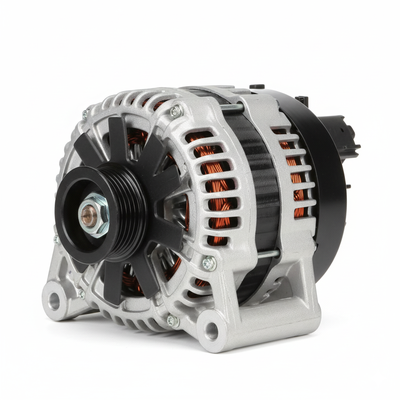
Component that converts mechanical engine energy into electricity to charge the battery and power electrical systems.
Top Alternator
Select a brand to find parts compatible with your vehicle.
OE Reference
Price incl. 20% VAT

OE Reference
Price incl. 20% VAT
OE Reference
Price incl. 20% VAT
OE Reference
Price incl. 20% VAT
OE Reference
Price incl. 20% VAT
OE Reference
Price incl. 20% VAT
OE Reference
Price incl. 20% VAT
OE Reference
Price incl. 20% VAT
Alternator for Top Car Brands
Select a brand to find parts compatible with your vehicle.
Learn More About Alternator
The alternator is the vehicle's onboard power plant, converting mechanical energy into alternating current (AC), which is then rectified to DC. It powers the ignition, lights, and accessories while maintaining the battery's charge. Failure leads to battery depletion and vehicle shutdown. Modern alternators feature internal regulators to prevent overcharging and ensure a stable voltage output under varying loads.
Frequently Asked Questions About Alternator
What are the advantages of a genuine alternator?
It provides a highly stable voltage to safely power complex onboard electronics and efficiently charge the vehicle's battery.
Why is LIN-bus communication in a genuine alternator essential?
Modern alternators communicate directly with the ECU via LIN-bus protocols. Genuine (OE) alternators guarantee a perfect digital "handshake," allowing the charging process to be precisely adjusted based on battery temperature and engine load. Generic parts often lack these exact protocols, leading to dashboard error codes and premature battery failure.
How do the internal copper windings of an OE alternator differ from cheaper alternatives?
Genuine alternators use high-grade, pure copper and precision winding techniques to minimize internal resistance and heat. This ensures higher efficiency and stable power output even at idle. Cheap alternatives often use thinner or lower-purity windings that overheat and burn out quickly under heavy electrical loads.
Why are the bearings in a genuine alternator more durable?
An alternator spins at extremely high RPMs. Genuine units are equipped with premium, high-temperature bearings featuring specialized seals that block dust and moisture. This prevents the common "whining" noise of worn bearings and ensures whisper-quiet operation throughout the vehicle's lifespan.